
For decades, leaders have been taught to master one thing above all else: time management.
We learn how to prioritize tasks, organize calendars, and maximize productivity. Every minute is carefully scheduled, every meeting optimized, and every deadline tracked.
Yet despite all our efforts, many leaders still end each day feeling mentally drained, emotionally depleted, and unable to perform at their best.
Perhaps the problem isn’t how we manage our time.
Perhaps it’s how we manage our energy.
The reality is simple: every decision, conversation, and strategic insight comes from the human brain. And the brain is not an unlimited resource. Like any high-performance system, it requires periods of recovery to function optimally.
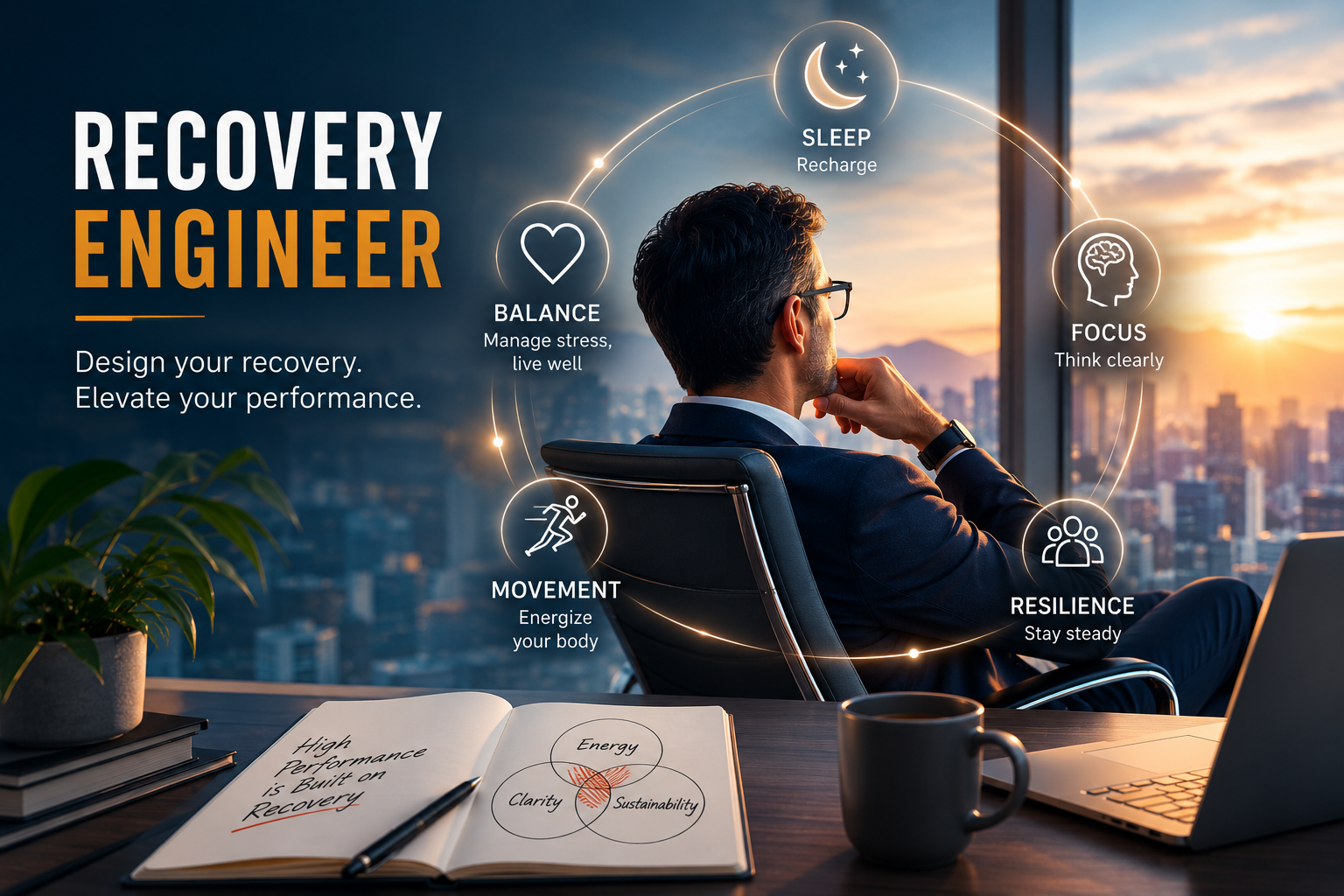
This is why I believe the future belongs to a different kind of leader—a Recovery Engineer.
From Time Management to Energy Management
Time is fixed.
Everyone has 24 hours in a day.
Energy is different.
It rises and falls based on sleep, stress, nutrition, movement, emotional load, and recovery.
Two executives may work the same number of hours, yet produce very different outcomes.
One finishes the day clear-minded and composed.
The other struggles to focus, reacts emotionally, and makes poorer decisions.
The difference is rarely time.
It’s capacity.
And capacity depends on recovery.
What Is a Recovery Engineer?
A Recovery Engineer doesn’t simply react to fatigue.
They design systems that prevent it.
Instead of asking, “How can I fit in more work?”, they ask:
- How can I protect my decision-making capacity?
- How can I recover more effectively after periods of stress?
- How can I sustain high performance without sacrificing long-term health?
Recovery becomes intentional rather than accidental.
It becomes part of leadership strategy.
Recovery Is Not About Doing Less
Many people associate recovery with slowing down.
That isn’t the goal.
Recovery exists so that when it is time to perform, you can perform at your very best.
Think about elite athletes.
They don’t recover because they are weak.
They recover because they intend to compete again tomorrow.
Leadership is no different.
The objective isn’t to avoid pressure.
The objective is to recover well enough to thrive under pressure.
Designing Recovery Into Your Day
Recovery doesn’t require dramatic lifestyle changes.
Often, small daily habits make the biggest difference:
- Protect your sleep as you would an important business meeting.
- Build short breaks between mentally demanding tasks.
- Step outside for natural light early in the day.
- Move regularly instead of sitting for hours.
- End the workday by writing down tomorrow’s priorities, allowing your mind to switch off.
These habits may seem simple, but together they create a stronger foundation for clearer thinking, better emotional regulation, and more consistent leadership.
The Leadership Advantage
Organizations invest heavily in developing skills, systems, and technology.
Yet their greatest competitive advantage still lies in the quality of their people—especially the quality of their thinking.
Leaders who understand recovery don’t just feel better.
They make better decisions.
They remain calmer under pressure.
They build healthier teams.
And they sustain high performance over the long term.
That is the difference between merely managing time and engineering recovery.
Final Thought
The workplace doesn’t need leaders who can simply endure more stress.
It needs leaders who can recover better from it.
Because sustainable high performance isn’t built on working longer.
It’s built on protecting the capacity to think clearly, lead wisely, and perform consistently.
The future won’t belong to the busiest leaders.
It will belong to the best Recovery Engineers.