
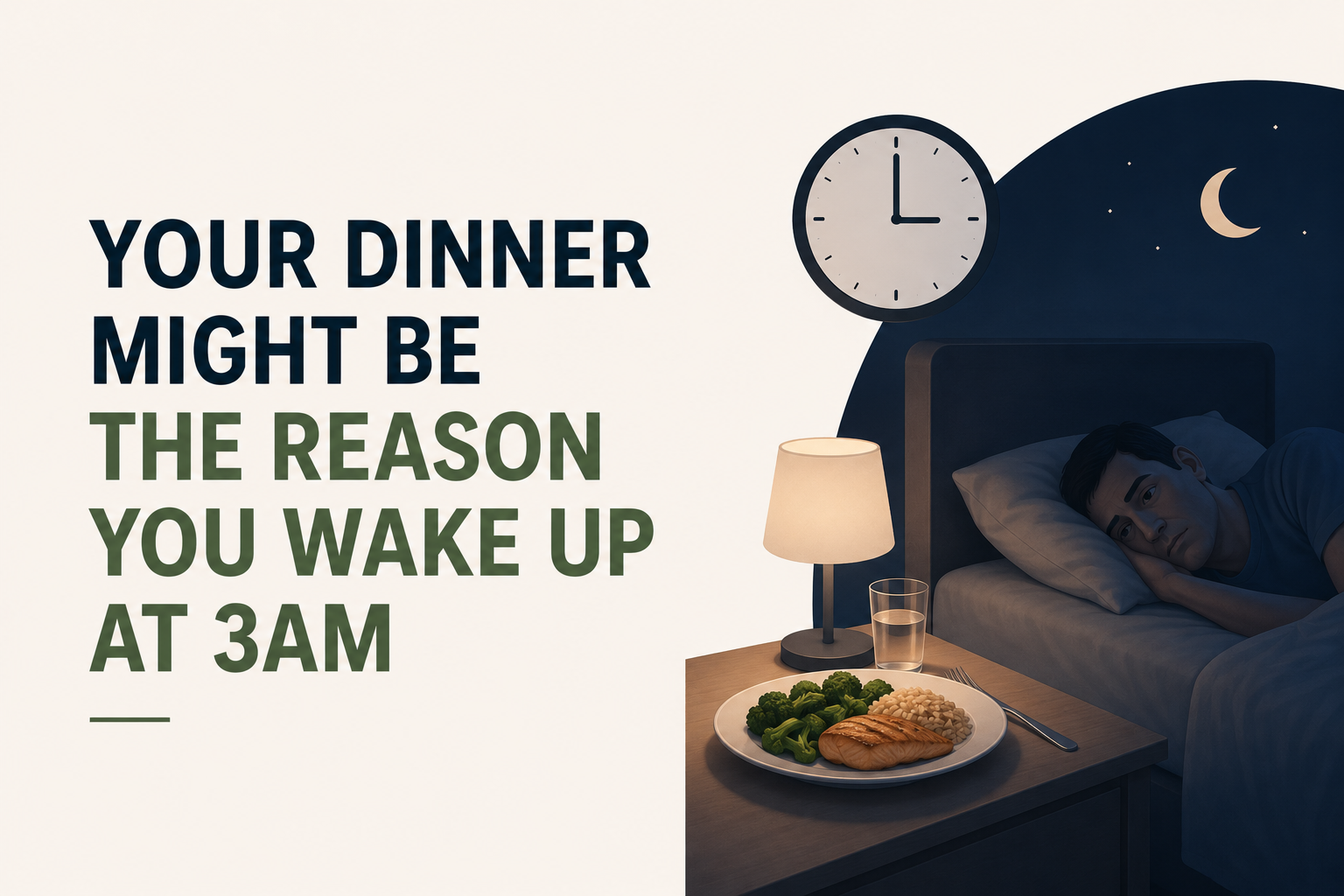
Many people think their sleep problem starts in the middle of the night.
They wake up at 3AM.
Mind racing.
Heart slightly alert.
Unable to fall back asleep.
And they assume the problem is stress.
Sometimes it is.
But often, the problem started much earlier:
At dinner.
What you eat at night—and when you eat it—can quietly determine the quality of your sleep.
1. Sleep Is a Metabolic Event Too
Most people think sleep is purely neurological.
But sleep is also deeply metabolic.
Your body is trying to do several important things at night:
- regulate hormones
- repair tissues
- stabilize blood sugar
- clear brain waste
- lower nervous system activity
- enter deep recovery states
When dinner overloads the system, sleep quality suffers.
Especially when meals are:
- too late
- too large
- too sugary
- too processed
- combined with alcohol
The body stays “busy” when it should be recovering.
2. Why You Wake Up at 3AM
One common reason for waking up at night is unstable blood sugar.
Here’s what often happens:
You eat a heavy or high-sugar dinner.
Blood sugar spikes.
Insulin rises aggressively.
A few hours later, blood sugar crashes too low.
Your body responds by releasing stress hormones like:
- cortisol
- adrenaline
This is a survival mechanism designed to raise blood sugar back up.
The result?
You suddenly wake up.
Sometimes anxious.
Sometimes hot.
Sometimes alert for no reason.
Many people think this is “stress.”
Sometimes it is a glucose roller coaster.
3. Alcohol May Help You Fall Asleep — But Not Stay Asleep
Many professionals use alcohol to “wind down.”
And yes, alcohol can make you sleepy initially.
But sleep onset is not the same as sleep quality.
Alcohol disrupts:
- deep sleep
- REM sleep
- nervous system recovery
- nighttime stability
This is why people often wake up feeling:
- unrefreshed
- mentally foggy
- dehydrated
- restless during the night
Alcohol sedates.
It does not create restorative sleep.
4. Late Eating Confuses the Body Clock
Your body follows circadian rhythms.
Not just your brain—
your metabolism too.
Late-night eating sends the signal:
“Stay active. Food is still arriving.”
This delays the body’s transition into recovery mode.
The digestive system stays active.
Body temperature remains elevated.
Melatonin release becomes disrupted.
The result:
lighter sleep
more awakenings
poorer recovery
Your body cannot fully rest while still processing a heavy workload internally.
5. Better Sleep Often Starts With Better Timing
Improving sleep is not only about what you remove.
It is also about timing.
Simple adjustments can make a major difference:
- finish dinner earlier
- reduce heavy late-night meals
- minimize sugar close to bedtime
- reduce alcohol frequency
- prioritize lighter, protein-balanced dinners
- allow at least 2–3 hours before sleep
Sometimes people spend money on supplements…
when the biggest improvement starts with dinner timing.
6. Your Night Reflects Your Evening
Sleep is not an isolated event.
It reflects the biological conditions you create throughout the evening.
The body loves rhythm.
Predictability.
Stability.
When dinner supports recovery instead of disrupting it, sleep becomes easier.
Not forced.
Natural.
Final Thought
Many people focus only on what happens at bedtime.
But often, restorative sleep is shaped hours earlier.
By what you eat.
When you eat.
And how stable your body remains through the night.
Because sometimes the reason you wake up at 3AM…
is sitting on your dinner plate.