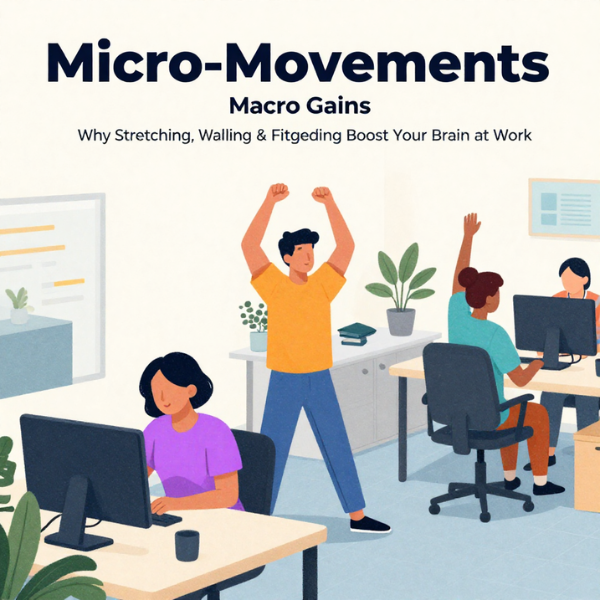
When people think about improving health and productivity, they often imagine structured workouts at the gym. But some of the most powerful benefits for both body and brain come from much smaller actions throughout the day.
These small bursts of movement are known as NEAT — Non-Exercise Activity Thermogenesis, and they play a surprisingly important role in energy levels, metabolic health, and cognitive performance.
For busy professionals and leaders, these micro-movements can make a big difference.
What Is NEAT?
NEAT refers to the calories burned and physiological benefits gained from everyday activities that aren’t considered formal exercise.
This includes movements such as:
- Walking to a colleague’s desk
- Standing during a call
- Stretching between meetings
- Fidgeting or shifting posture
- Taking the stairs instead of the elevator
While each action may seem minor, together they significantly contribute to daily energy expenditure and physical activity.
Why Sitting All Day Drains Your Brain
Extended periods of sitting can reduce circulation, slow metabolism, and contribute to fatigue and mental fog.
When the body stays still for too long, blood flow to the brain decreases slightly, which can impact concentration and alertness. Over time, prolonged sedentary behavior is also associated with increased risks of metabolic conditions and musculoskeletal discomfort.
In contrast, even short movement breaks help stimulate circulation, deliver oxygen to the brain, and restore mental focus.
Micro-Movement for Cognitive Refresh
Short movement breaks during the workday can serve as mental reset buttons.
Research suggests that brief activity—even just a few minutes—can improve:
- Focus and attention
- Mood and stress regulation
- Energy levels
- Problem-solving ability
This is particularly helpful for leaders who spend long hours in meetings, strategy sessions, or deep thinking work.
Sometimes the best productivity hack is simply standing up.
Easy Ways to Add Movement to Your Workday
Incorporating NEAT into a work routine doesn’t require scheduling extra workouts. Instead, it’s about making movement a natural part of the day.
Consider these simple strategies:
- Take a 2–3 minute stretch break every hour
- Walk during phone or virtual meetings
- Stand up while reviewing documents or emails
- Use the stairs when possible
- Do light mobility exercises between tasks
These small actions accumulate into meaningful health and productivity benefits.
Small Movements, Big Leadership Energy
The modern workplace often demands long hours of sitting, deep concentration, and back-to-back meetings. Micro-movements provide a simple way to counteract the physical and mental strain of that environment.
For leaders, staying physically engaged throughout the day helps sustain energy, maintain mental clarity, and model healthy work habits for teams.
Because sometimes the biggest gains come from the smallest moves.