
In leadership, speed and clarity of thought are everything.
The ability to assess situations, make decisions, and respond effectively under pressure often defines success at the highest levels.
But here’s what most leaders don’t realize:
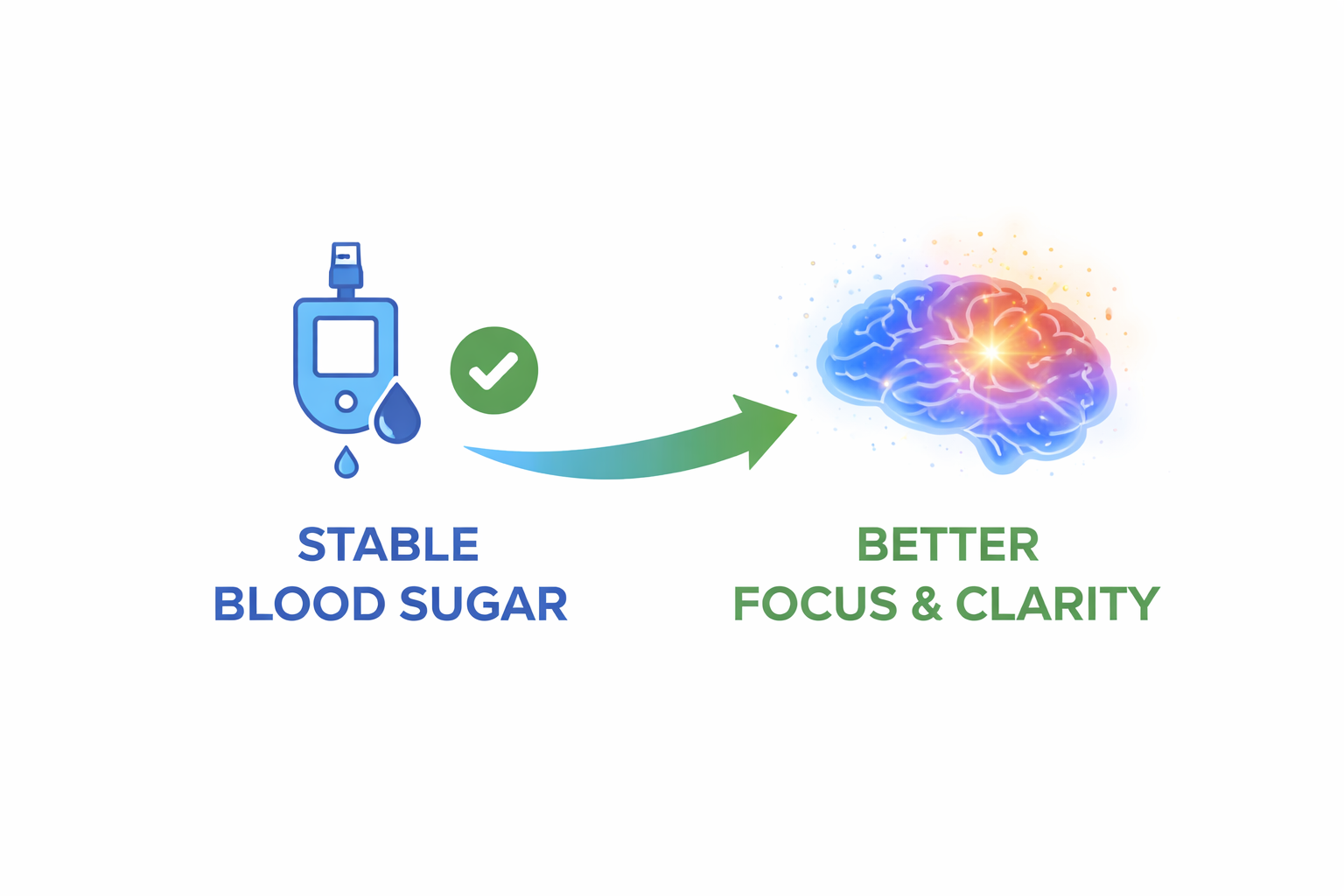
Your ability to think clearly is directly tied to how stable your blood sugar is.
Not your intelligence.
Not your experience.
Not even your work ethic.
Your glucose.
1. The Brain’s Preferred Fuel — and Its Biggest Vulnerability
The brain is one of the most energy-demanding organs in the body.
It relies heavily on glucose as its primary fuel source. But more importantly, it depends on a steady supply of glucose — not spikes and crashes.
When glucose levels are stable:
- Focus is sustained
- Thinking is sharp
- Reactions are measured
- Energy is consistent
But when glucose fluctuates:
- Mental clarity drops
- Decision-making slows
- Irritability increases
- Fatigue sets in
This is why many leaders feel:
- Energized in the morning
- Sluggish after lunch
- Mentally drained by late afternoon
It’s not just the workload.
It’s the fuel system.
2. The Spike-and-Crash Cycle
A typical workday for many professionals looks like this:
- Coffee or a quick carb-heavy breakfast
- A rushed lunch high in refined carbohydrates
- Snacks or caffeine to push through the afternoon
This creates a pattern of glucose spikes followed by crashes.
During a spike:
- Energy feels high
- Focus may temporarily improve
But shortly after:
- Blood sugar drops
- The brain experiences a fuel dip
- Cognitive performance declines
This crash phase is where:
- Brain fog appears
- Patience decreases
- Motivation dips
- Decision fatigue accelerates
Leaders often mistake this for tiredness or lack of discipline — but it’s simply unstable energy physiology.
3. Glucose and Emotional Control
Leadership is not just about thinking — it’s also about regulating emotions.
When blood sugar drops:
- The brain perceives it as a stress signal
- Cortisol and adrenaline are released
- Emotional reactivity increases
This is why low blood sugar states are often associated with:
- Irritability
- Impulsiveness
- Reduced tolerance for complexity
In leadership settings, this can show up as:
- Overreacting in meetings
- Losing patience with team members
- Making rushed or defensive decisions
Stable glucose, on the other hand, supports:
- Calmness
- Composure
- Better interpersonal interactions
4. The Link Between Glucose and Sleep
Blood sugar and sleep are deeply interconnected.
When glucose is unstable during the day:
- Cravings increase at night
- Late-night eating becomes more likely
- Sleep quality declines
Conversely, poor sleep worsens glucose regulation the next day — creating a cycle:
Poor sleep → unstable glucose → poor decisions → increased stress → worse sleep
Breaking this cycle requires addressing both sides — but glucose stability is often the fastest entry point.
5. High-Performance Nutrition for Leaders
You don’t need a complex diet to improve glucose stability.
What you need is consistency and structure.
Here are practical shifts that make a meaningful difference:
1. Start with Protein in the Morning
A protein-rich breakfast stabilizes blood sugar and reduces mid-day crashes.
2. Build Balanced Meals
Each meal should include:
- Protein
- Fiber
- Healthy fats
This slows glucose absorption and prevents spikes.
3. Reduce Refined Carbohydrates
Highly processed carbs create rapid spikes followed by sharp crashes.
4. Avoid Constant Snacking
Frequent eating keeps insulin elevated and prevents metabolic stability.
5. Move After Meals
Even a short walk improves glucose control and reduces post-meal dips.
6. Glucose Stability as a Leadership Advantage
Most leaders are competing on:
- Strategy
- Execution
- Experience
But very few are optimizing their internal operating system.
Leaders who stabilize their glucose often experience:
- More consistent energy throughout the day
- Sharper thinking in critical moments
- Better emotional control under pressure
- Greater resilience across long work hours
This creates a quiet but powerful advantage because they operate from a more stable physiological baseline.
Final Thought: Stable Energy, Stronger Leadership
Leadership is often described as a mental game.
But the mind does not operate in isolation.
It is supported — or compromised — by the body.
Glucose stability is one of the most fundamental, yet overlooked, drivers of:
- Cognitive clarity
- Emotional intelligence
- Decision quality
So the next time your focus dips or your patience shortens, ask yourself:
“Is this a leadership problem — or an energy problem?”
Because sometimes, the fastest way to become a better leader
is not to think harder but to fuel smarter.