
In leadership, pressure is expected.
Deadlines, decisions, stakeholder expectations — these are part of the role. But what many leaders fail to recognize is this:
The real threat is not stress itself — it’s how stress interacts with your biology.
Specifically, how it affects your sleep and your blood sugar.
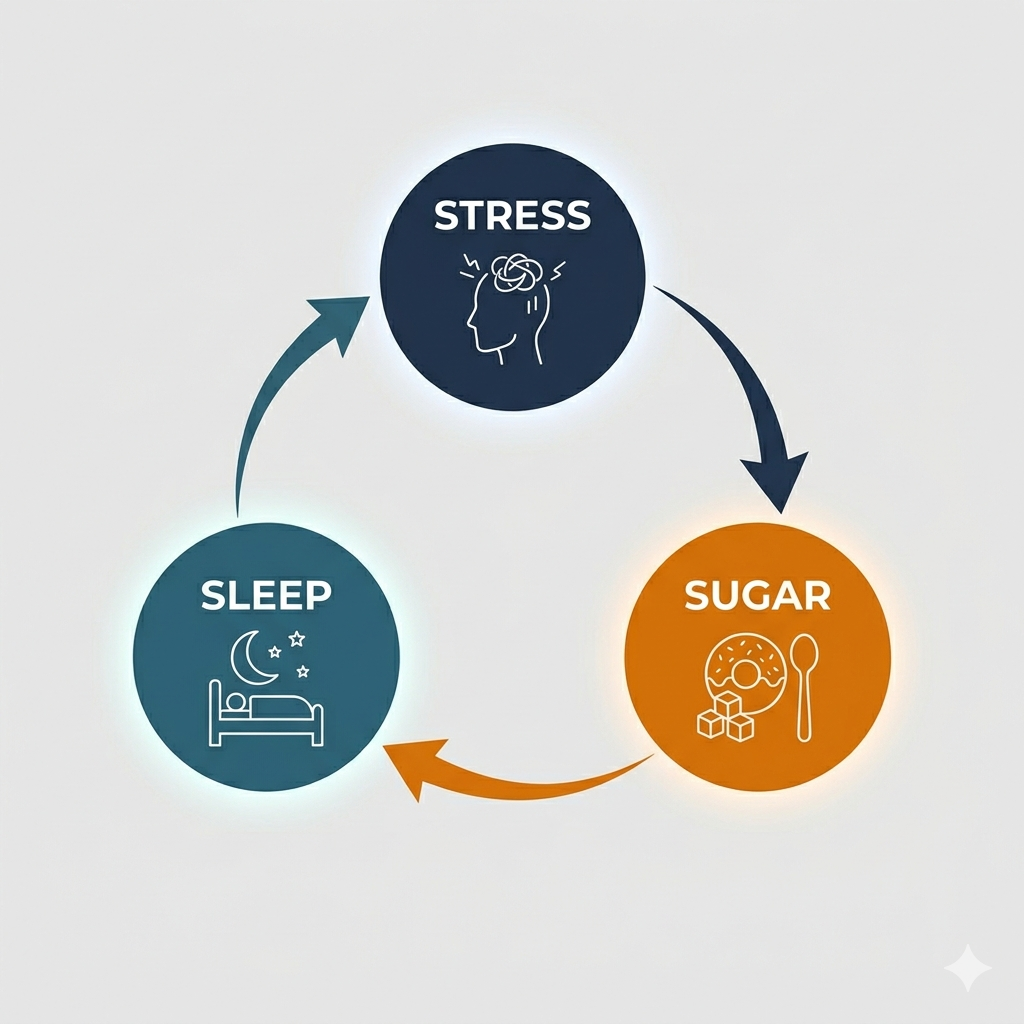
These three elements — stress, glucose, and sleep — form a tightly connected system. When one is disrupted, the others follow.
And when this system breaks down, leadership performance quietly declines.
1. Stress Is Not Just Mental — It’s Hormonal
Most leaders think of stress as a psychological experience.
But stress is, first and foremost, a biological response.
When you’re under pressure, your body releases cortisol — a hormone designed to help you respond quickly and stay alert.
In short bursts, this is helpful.
But when stress becomes chronic, cortisol remains elevated — and that’s where the problems begin.
Elevated cortisol:
- Disrupts sleep cycles
- Increases blood sugar levels
- Impairs recovery
- Keeps the body in a constant “alert” state
This means that even when the workday ends, your body may still be operating as if it’s in the middle of a crisis.
2. The Glucose Rollercoaster Leaders Don’t See
Here’s where stress and metabolism intersect.
Cortisol raises blood glucose to provide quick energy for action. But in modern work environments, that energy is rarely used physically — it stays in the bloodstream.
Over time, this leads to:
- Blood sugar spikes followed by crashes
- Increased cravings (especially for sugar and caffeine)
- Reduced insulin sensitivity
- Energy instability throughout the day
This is why many leaders experience:
- Mid-afternoon crashes
- Brain fog after meals
- Irritability under pressure
- Difficulty maintaining focus
It’s not just workload.
It’s glucose volatility driven by stress.
3. Sleep: The First Casualty of Stress and Sugar
When stress is high and blood sugar is unstable, sleep is often the first system to break.
High cortisol levels make it difficult to:
- Fall asleep
- Stay asleep
- Reach deep and REM sleep stages
Meanwhile, late-night eating or elevated glucose levels can:
- Disrupt melatonin production
- Increase nighttime awakenings
- Reduce sleep quality
This creates a vicious cycle:
Stress → elevated cortisol → glucose instability → poor sleep → higher stress the next day
And the cycle repeats.
4. The Leadership Cost of This Cycle
This trio — stress, sugar, and sleep — doesn’t just affect health.
It directly impacts leadership performance.
When this system is dysregulated, leaders often experience:
- Reduced decision clarity
- Shorter attention span
- Increased emotional reactivity
- Lower resilience under pressure
- Reduced ability to think long-term
In high-stakes environments, even small impairments can lead to significant consequences.
This is how performance erodes — not suddenly, but gradually.
5. Breaking the Cycle: A Leadership-Level Approach
The goal is not to eliminate stress.
That’s unrealistic in leadership.
The goal is to regulate the system.
Here are three practical strategies:
1. Regulate Your Nervous System Daily
Short interventions like breathing exercises, walking, or brief pauses between meetings help reduce cortisol and reset your state.
2. Stabilize Your Blood Sugar
Eat balanced meals with protein, fiber, and healthy fats. Avoid relying on sugar and caffeine to compensate for fatigue.
3. Protect Your Sleep Window
Treat sleep as a non-negotiable recovery block. Reduce late-night stimulation — both mental and nutritional.
Final Thought: Leadership Is a Physiological Game
Most leadership training focuses on skills, mindset, and strategy.
But none of these can operate at their highest level if the underlying biology is unstable.
Stress, glucose, and sleep form the foundation of:
- Your energy
- Your clarity
- Your emotional control
And ultimately, your leadership effectiveness.
Because leadership is not just about what you know.
It’s about the state you bring into every decision, every meeting, and every moment of pressure.And that state is shaped — every day — by how well you manage stress, fuel, and recovery.